




Oil prices have received plenty of attention this year as geopolitical tensions in Iran and supply disruptions surrounding the closure of the critical Strait of Hormuz have affected global energy markets. Yet when it comes to understanding how this ultimately affects the consumer, we need to dig a little deeper.
Let me start by saying that we do not pull into a gas station and say, “Fill it up with crude oil, please.” Before crude oil becomes useful, it must go through a refinery and be turned into gasoline, diesel, jet fuel, and other products. The difference between what refiners pay for crude oil and what those finished products are worth is known as the crack spread.
Despite the unusual name, the concept is relatively simple. When that spread rises sharply, it generally indicates that finished products are becoming scarce relative to the available supply of crude oil.
Diesel is often described as the lifeblood of the global economy because it powers many of the activities that keep goods and commerce moving. Trucks, trains, agricultural equipment, construction machinery, and many industrial operations depend on diesel. Higher diesel prices can therefore ripple throughout the economy as businesses pass some of those additional transportation expenses on to consumers. This can contribute to inflation and potentially complicate the Federal Reserve's decisions about interest rates.
U.S. diesel crack spreads reached a record of nearly $120 per barrel in mid-September, compared with an average of roughly $42 per barrel since 2022. Although those spreads have since declined from their peak, they remain unusually elevated.
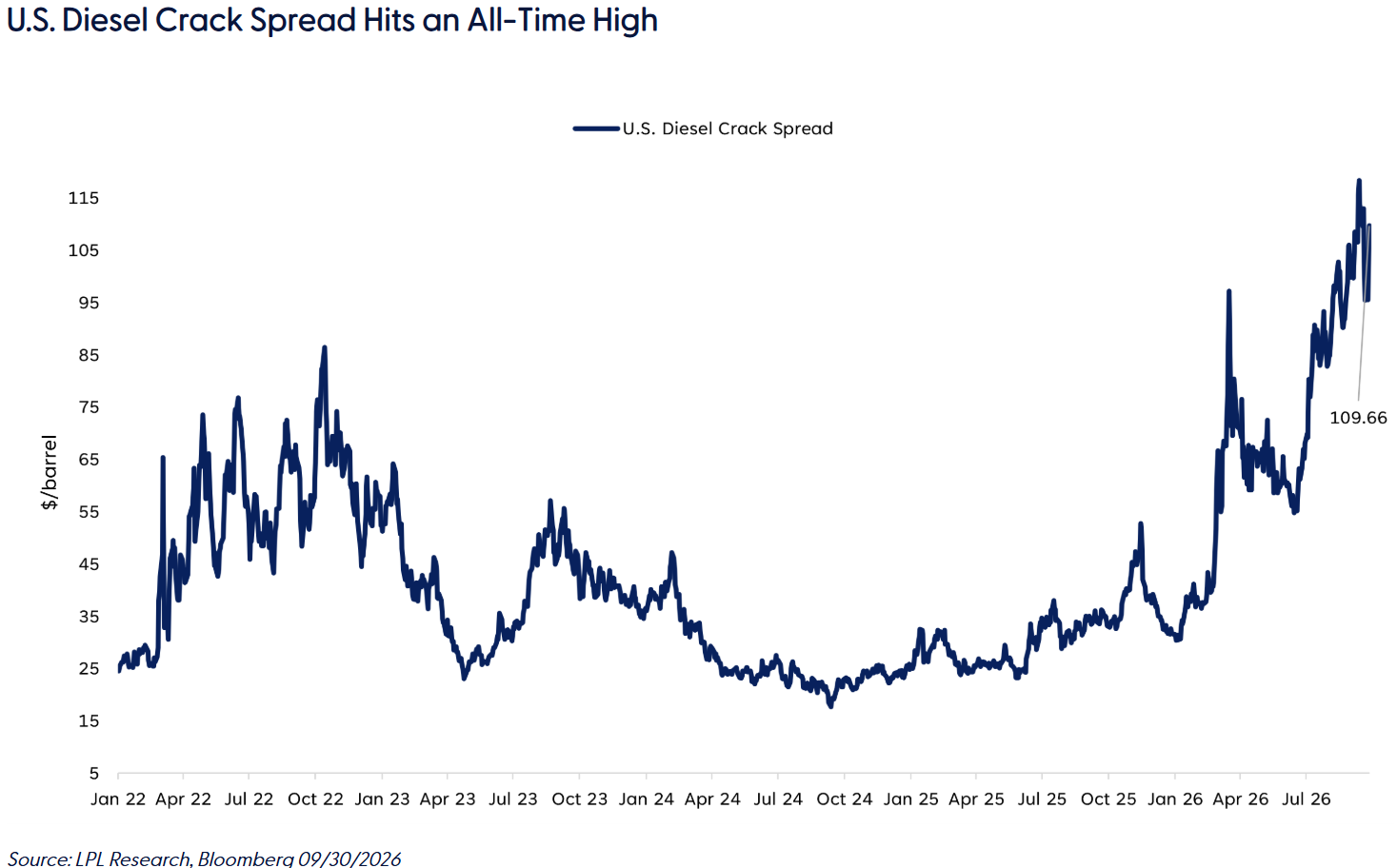
Several factors have combined to tighten global supplies of refined fuels. Geopolitical conflicts have disrupted oil shipping and refining capacity in important energy-producing regions. At the same time, disruptions to Russian refining activity have added further pressure to global diesel supplies.
The important distinction is that the issue may no longer be simply, “Do we have enough crude oil?” Increasingly, the question is, “Do we have enough capacity to turn that crude oil into the fuels the global economy needs?”
That shift helps explain why crack spreads have remained elevated even when crude oil prices have fluctuated.
The Bigger Picture
For our clients, the takeaway is not to become energy-market experts or start tracking diesel prices every day. Rather, it is another reminder that inflation and interest rates can be influenced by developments far beyond traditional economic data.
For much of the year, markets have focused on the price and availability of crude oil. The next chapter may be about the availability of the refined fuels that power the economy.
With diesel markets remaining tight, crack spreads could be an important indicator to watch in the months ahead. If fuel costs stay elevated, they could keep some inflationary pressure in the system and make the Federal Reserve's interest-rate decisions more complicated.
Bottom line
Oil prices tell us part of the story, but today the cost of converting oil into usable fuel may be telling us something equally important. Elevated diesel crack spreads suggest that global fuel supplies remain tight, creating another potential source of inflation and economic uncertainty.
As always, please feel free to reach out if you have questions about the markets or your portfolio.
Read the full commentary: How Crack Spreads are a Signal Beneath Oil Prices
.gif)

.png)

.png)