


It was at the very beginning of my career when a senior portfolio manager pulled me aside and gave me some valuable advice. I had just graduated from college and believed my four-year banking and finance degree had equipped me to fully understand the complex world of global markets. Needless to say, I quickly learned otherwise.
He said, “Falko, if you want to know what’s really happening in the global economy, don’t listen to the stock traders. They’re almost always optimistic and enthusiastic. If you want meaningful insight, watch the bond traders. They tend to be quieter and more reserved, but they’re often six months ahead of everyone else.”
More than two decades later, that advice stayed with me.
Artificial intelligence (AI) continues to dominate headlines, but its influence is expanding beyond technology stocks and increasingly affecting the bond market. The massive investment required to build AI infrastructure is becoming an important driver of interest rates, bond issuance, and fixed-income returns.
AI Investment Is Fueling Economic Growth
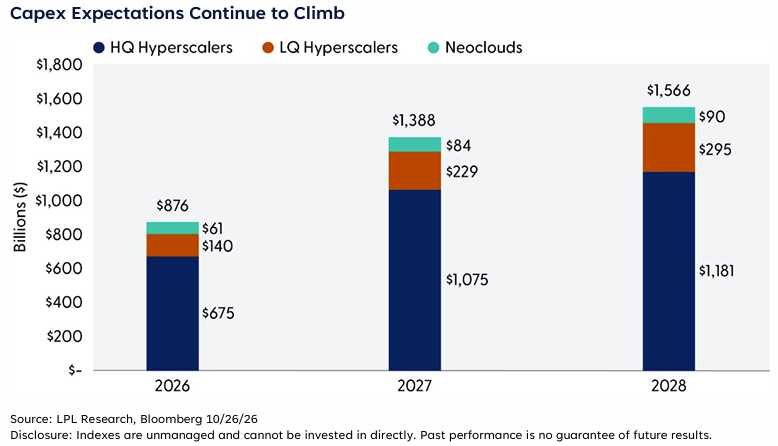
Technology giants are investing unprecedented amounts in data centers, semiconductors, and energy infrastructure to support AI development. Capital spending by the largest so-called hyperscalers, such as Microsoft, Amazon, and Google, is expected to reach $1 trillion annually, helping keep economic growth resilient despite higher interest rates.
Higher Spending May Keep Rates Elevated
This wave of investment is contributing to sustained demand for labor, power, and raw materials, creating inflationary pressures that may make it more difficult for the Federal Reserve (Fed) to lower interest rates. In fact, market participants currently expect additional Fed rate hikes as AI-related spending continues to support economic activity.
Technology Companies Are Borrowing More
Historically, many large technology firms funded growth primarily through internally generated cash flow. That trend has shifted. Today, even companies with strong balance sheets are issuing significant amounts of long-term debt to finance AI investments. Companies such as Amazon, Alphabet, and Microsoft have raised billions in the bond market, adding substantial new supply for investors to absorb.
What This Means for Bond Investors
The surge in corporate bond issuance has created competition with U.S. Treasury securities for investor capital, particularly in longer maturities. This additional supply has contributed to higher long-term yields, which can pressure bond prices but also provide investors with more attractive income opportunities.
Opportunities and Risks Ahead
At HighWater Wealth, we believe the bond market is currently pricing in continued strength in AI-related investment. If spending remains robust, today’s higher yields may continue to offer attractive income opportunities. However, if AI-related investment slows, Treasury bonds and other high-quality fixed-income assets could benefit as interest-rate expectations decline. Conversely, lower-quality AI-related borrowers could face increased pressure if growth expectations weaken.
Our Perspective
The AI revolution may ultimately improve productivity and economic growth over the long term, but its near-term effect has been to keep interest rates higher and reshape fixed-income markets. While uncertainty remains, today’s elevated bond yields continue to present attractive opportunities for investors seeking income and portfolio diversification. Maintaining a disciplined approach across fixed-income sectors remains important as markets adapt to this rapidly evolving trend.
As always, please reach out if you would like to discuss how changing market conditions may affect your financial plan or investment strategy.
Read the full commentary: How AI Spending Is Reshaping Bond and Rates Markets